


Last Tuesday I watched a guy feed a €5 slot machine for forty minutes, convinced it was "due." He'd logged every spin in a notes app. When the bonus finally hit and paid less than his total wagered, he looked genuinely betrayed — as if the machine had broken a promise. It hadn't. He had simply never done the one calculation that matters most: expected value.
If you spend real money in iGaming — slots, sports betting, poker, blackjack, whatever pulls you in — you owe it to yourself to understand what these games actually are mathematically. Not to kill the fun. To stop being the guy with the notes app.
RTP Is Not a Timeline — It's an Average
Return to player (RTP) is the percentage of all money wagered on a game that gets paid back to players over the long run. A slot with 96% RTP theoretically returns €96 for every €100 cycled through it. The operator keeps the other 4% — that's the house edge.
Here's where most people go wrong: RTP describes an infinite sample size, not your session. If you wager €100 at 96% RTP, you are not guaranteed to get €96 back. You might get €940 back. You might get €0. The RTP is the mathematical anchor that results drift toward after millions of spins — spins you will never personally reach. The distribution of outcomes around that average is what actually determines whether you have a good night or a brutal one. A good place to continue is SHBET.
Variance — volatility — is the missing half of the conversation. A high-volatility slot might pay its 96% RTP through rare jackpot-style hits, while a low-volatility game spreads it out in frequent small wins. Same RTP, completely different experience. If you have a €200 bankroll, a 10,000x-max-win slot will eat you alive far more often than a 250x-max-win slot, even though their RTPs might be nearly identical.
House Edges Across the Games You Actually Play
Not all casino games are created equal, and the gap is enormous. Here are rough house edges for common games played with reasonable strategy:
- Blackjack (basic strategy): ~0.5%. The best odds in the building if you actually learn the chart.
- Baccarat (banker bet): ~1.06%, minus the 5% commission on wins.
- Craps (pass line with odds): ~1.4% or lower depending on odds bets.
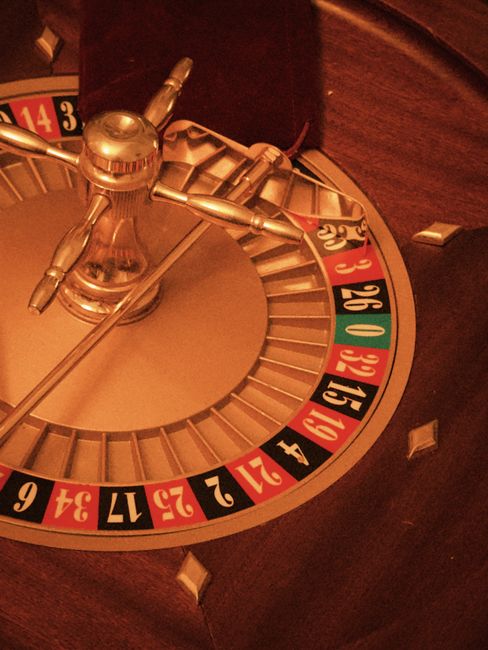
- European roulette: 2.7% (single zero). American roulette with the double zero: 5.26%.
- Slots: typically 2% to 10%, often 4% to 6% in regulated online markets.
- Keno and big-jackpot lottery-style games: frequently 15% to 35%.
Look at that list and the strategy writes itself for anyone thinking long-term. The same €1,000 cycled through European roulette expects a €27 loss in theory, while the same amount through a 25% house-edge keno game expects a €250 loss. If your goal is time on device, you are literally buying entertainment at wildly different prices. SH BET offers a practical breakdown of the topic.
Poker Is the Only Game Where You Beat People, Not the House
Poker is a different animal entirely. The house takes a rake — typically 5% capped at €3 in cash games, or a tournament fee of around 10% added to the buy-in — but beyond that, the money moves from weaker players to stronger ones. That means your expected value depends almost entirely on the quality of your table.
A winning player at €1/€2 with a 4 bb/100 win rate makes roughly €8 per 100 hands before rake, and rake will absolutely devour that if you're not careful about game selection. This is why serious grinders chase soft games and bonuses so aggressively — the difference between a 3 bb/100 game and a 6 bb/100 game is the difference between a side hustle and a real income stream. If you're playing poker purely for fun, that's fine. Just know that "break-even" is a genuinely good result for most recreational players.
Bonuses, Promos, and the Fine Print That Eats Them
Welcome bonuses and free spins look like free money until you read the wagering requirements. A 100% match up to €200 with 35x wagering sounds generous. It isn't always, if slots contribute only 20% toward clearing that bonus.
- Read the wagering multiplier, not the headline bonus amount.
- Check game contribution — many operators count slots at 100%, but live dealer and blackjack at 10% or even 0%.
- Look for max bet rules. Bet €10 on a €5 capped bonus and you may forfeit everything.
- Check the expiry. Bonuses that time out before you can clear them are window dressing.
A rough EV calculation helps. A €100 bonus with 35x wagering means €3,500 in required turnover. At 96% RTP, that turnover costs you about €140 in expectation. The bonus barely offsets the cost unless the game and structure are favorable. That's not a scam — it's just math most players never run.
What This Should Change About How You Play
If you take one thing away, make it this: iGaming products are priced entertainment, not investment vehicles. The companies running them are public businesses with shareholders — Flutter, Entain, Evolution — and their bottom line is built on the edge you're choosing to play against.
That doesn't mean don't play. It means play with your eyes open and your expectations calibrated. Set a budget before you log in and treat it as the cost of the experience. Choose lower-edge games when you want your money to last. Prefer high-RTP slots if you're spinning reels. Learn basic strategy for blackjack — it takes an afternoon and it's genuinely free money over your lifetime. And if you ever notice yourself chasing losses, tracking spins in a notes app waiting for a machine to be "due," stop. That machine has no memory. That's the whole point.
The people who enjoy iGaming the longest are the ones who treat the house edge as the price of the ticket and the variance as the show. Everybody else eventually becomes the guy with the notes app, blaming a machine that was just doing exactly what it was designed to do.
Related posts
More stories you’ll love reading